

Tiny Lives, Big Hearts: Bottle Baby Kittens
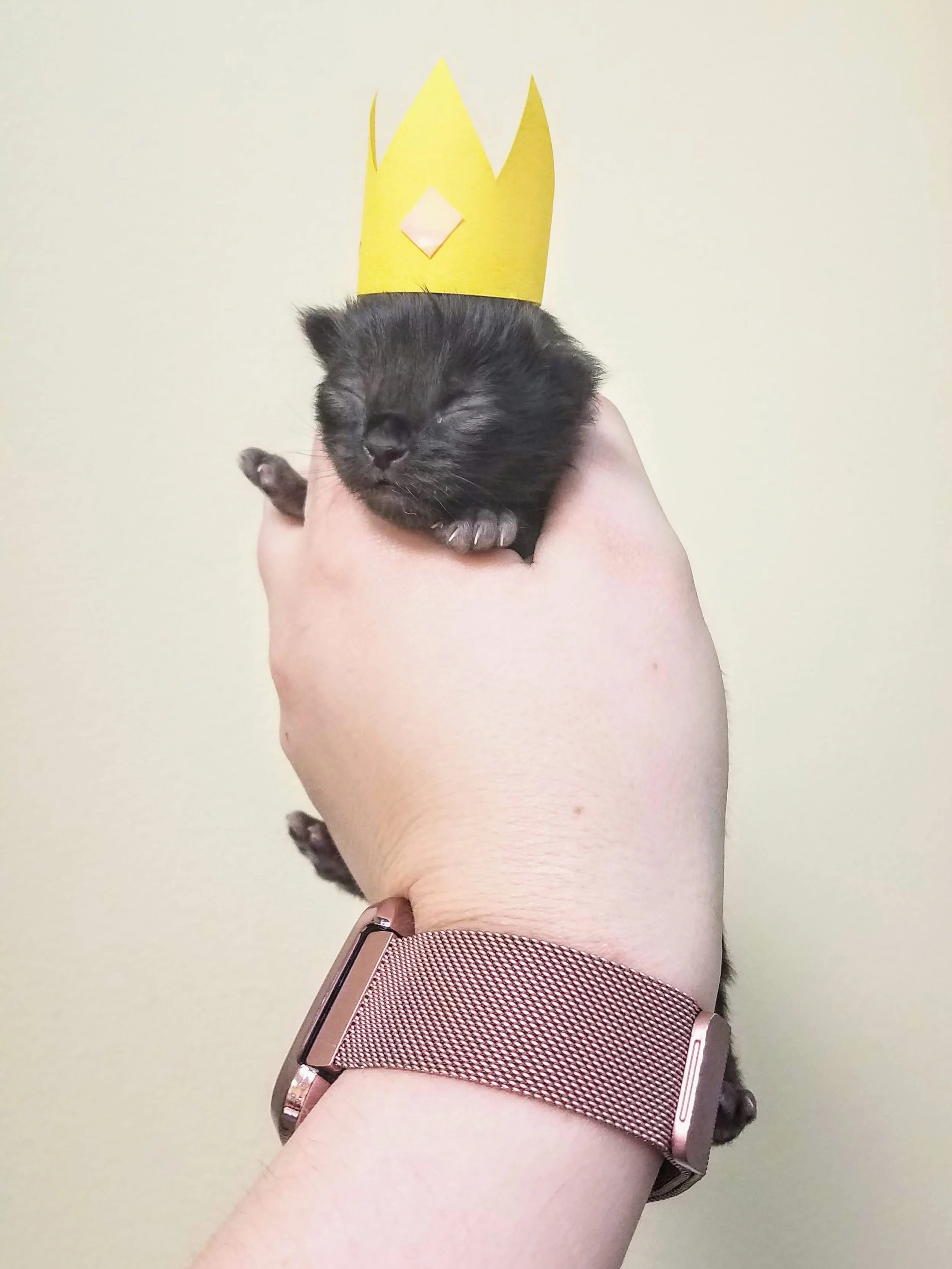
Tiny, squeaky, and completely dependent on the people around them, bottle baby kittens are some of the most fragile animals to come through a shelter's doors. Every year, shelters across the country welcome wave after wave of them, and each one needs someone to step in where their mom can't.
The good news? Caring for them is easier than you might think, and you don't need to be an expert to save a life. Let's talk about what bottle babies are, why kitten season keeps shelters so busy, and how fostering makes all the difference.
What Is a Bottle Baby Kitten?
A bottle baby is a kitten who is too young to eat on their own and doesn't have a mother cat to care for them. Most are under four weeks old. Many arrive with their eyes still closed and ears folded down, small enough to fit in the palm of your hand.
At this age, kittens depend completely on someone else to survive. They can't:
Eat solid food. They need kitten milk replacement formula from a bottle, every two to four hours, day and night. (Never give kittens cow's milk. It can make them very sick.)
Stay warm. Young kittens can't regulate their own body temperature, so they need a steady, gentle heat source.
Go potty on their own. Mom cats help kittens pee and poop by licking them. Without mom, a caregiver gently stimulates them with a warm, soft cloth after each feeding.
Their immune systems are still developing, too, which makes them especially fragile. That's why every feeding, every weigh-in, and every cuddle matters so much.
What Is Kitten Season?
Kitten season is the time of year when shelters see a huge wave of newborn kittens. Here in Virginia, it usually starts in spring and can stretch well into fall.
It happens because warmer weather and longer days signal outdoor cats to breed. A female cat can get pregnant as young as four months old, and she can become pregnant again just weeks after giving birth. That means one unspayed cat can have several litters in a single year.
Many of those kittens are found outside by kind neighbors, and some come to us through our partner shelters across the state. It's also a big reason affordable spay/neuter services are so important. Every cat who is fixed today means fewer kittens in need tomorrow.
Found kittens outside? Mom may just be out finding food. Watch quietly from a distance for a few hours before stepping in, unless the kittens are in danger, cold, or clearly sick. Check out our blog “Help! I found kittens” for more information.
What Caring for a Bottle Baby Looks Like
Bottle feeding sounds intimidating, but it quickly becomes a sweet little routine. A typical journey goes something like this:
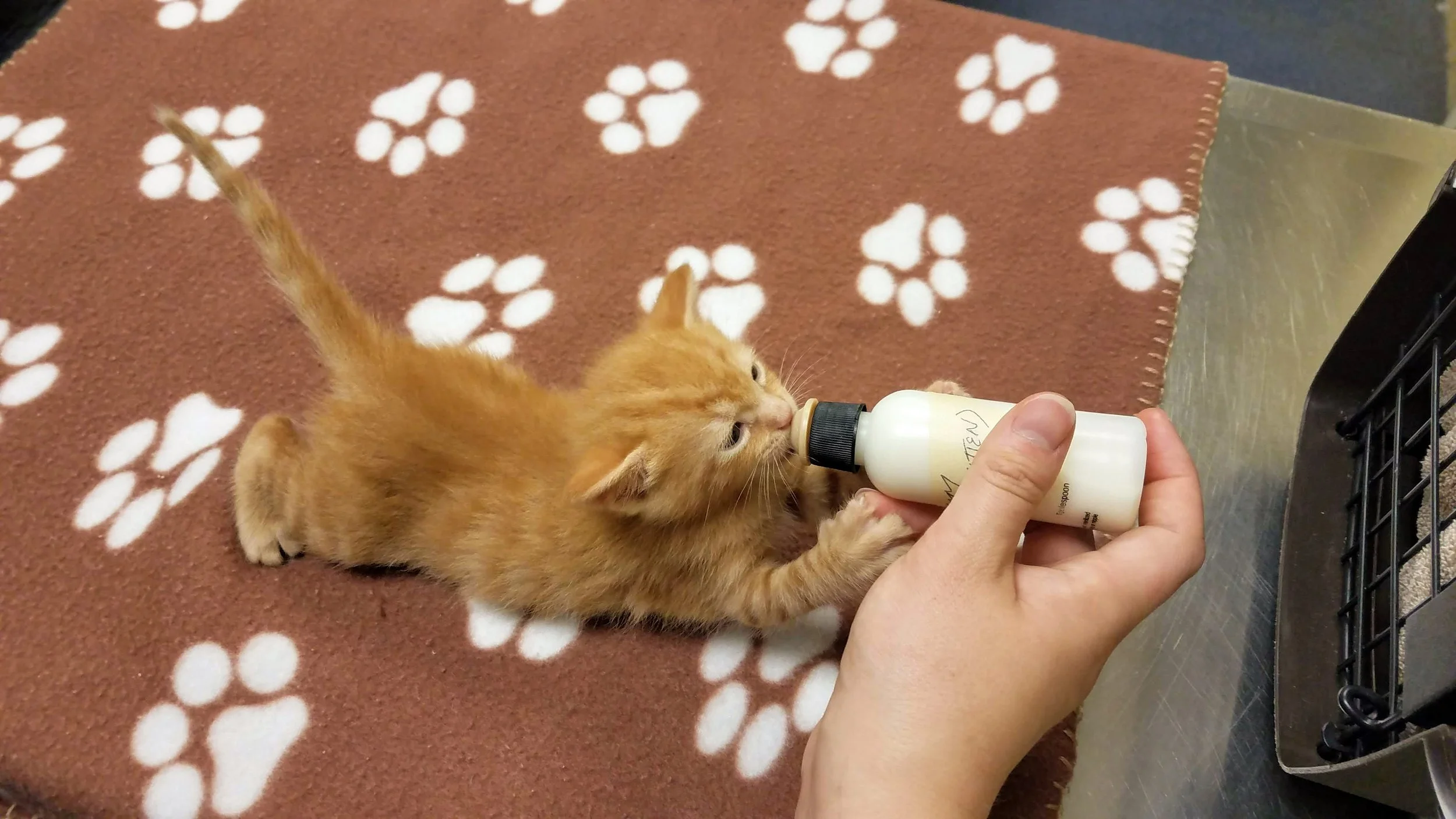
Newborn to 2 weeks: Feedings every two to three hours, around the clock. Eyes open somewhere between days 7 and 14.
2 to 4 weeks: Feedings start to spread out, and kittens begin wobbling around on tiny legs.
4 to 5 weeks: Weaning begins! Kittens start lapping formula from a dish and trying mushy kitten food. This stage is messy, but adorable.
5 to 8 weeks: Kittens eat on their own, learn to use the litter box, and play like it's their full-time job.
Around 8 weeks and 2 pounds: Kittens are ready for spay/neuter surgery and their very own homes.
Along the way, fosters weigh kittens daily to make sure they're gaining, keep them warm and clean, share updates with our team, and bring them for vaccines when they are old enough. Steady weight gain is one of the best signs a kitten is thriving.
Why Bottle Babies Need Fosters
A shelter is a wonderful place for many animals, but it isn't built for newborn kittens. Bottle babies need care every few hours, including overnight, and that kind of attention is hard to give when a building closes for the night.
Newborn kittens are also too young for vaccines. A quiet home keeps them away from the germs that naturally come with lots of animals under one roof.
Foster homes give bottle babies exactly what they need: warmth, round-the-clock feedings, and someone watching closely for any changes. Every foster also frees up space so we can say yes to more animals in need.
The best part? You don't need to be an expert. You just need a warm heart, a little space, and a willingness to learn. We'll handle the rest together.
Become a Bottle Baby Hero With RAL
Our foster families are true lifesavers, and we make sure you never go it alone. When you foster with RAL, you get:
Supplies and formula provided. Bottles, formula, heating pads, scales, and more, all covered.
Vet care from our expert medical team. Our clinic team is right here to keep your kittens healthy.
Training and ongoing support. We'll teach you everything you need to know and be a phone call away when questions pop up.
A short-term, flexible commitment. Most bottle babies are only in foster care for a few weeks, and you can foster when it fits your life.
Watching a kitten go from a tiny, fragile newborn to a playful, pouncing ball of fluff is one of the most rewarding experiences you'll ever have. And when they head off to their loving homes, you'll know you helped make it happen.
Ready to join our foster family? Visit www.ral.org/foster to sign up as a foster today. Together, we can give every bottle baby a chance to grow up.
